How AI is Reshaping the Creative Process
Read TIme
4 Min Read
Published Date
Apr 16, 2025
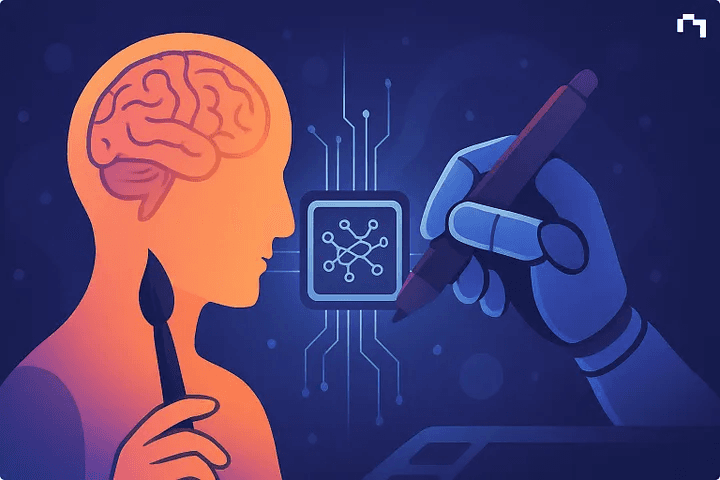
AI-Powered Design Tools: Ushering in a New Era of Creativity
Artificial intelligence is no longer just a buzzword — it’s becoming a game-changer in design. The infusion of AI into creative tools is transforming the way designers think, create, and deliver. Tasks that once took hours (or days!) can now be handled in minutes with AI support, enabling designers to focus more on big-picture thinking rather than getting stuck in the nitty-gritty.
Whether it’s generating entire user interfaces from a simple text prompt or streamlining repetitive processes, AI is boosting not only efficiency but also creativity. This isn’t just a shift in tooling — it’s a reimagining of the entire design process. And at the heart of it? A new creative collaboration where AI acts not as a replacement but as a reliable co-designer.
From Hand-Sketching to Digital Revolution
Design used to be deeply manual — every icon, layout, and color palette required hours of hands-on effort. Creating a logo, for example, was a slow process of sketching, tweaking, and refining. While the arrival of digital tools sped things up, the creative process still heavily relied on human execution.
Now Enter: AI
AI-powered design tools are taking things a step further. They’re not just making tasks faster — they’re helping designers think and work differently. These tools can analyze, adapt, and even learn your style preferences over time. They’re becoming creative collaborators — providing options, insights, and support to help bring ideas to life in smarter ways.
It’s a Partnership, Not a Takeover
Let’s be clear: AI isn’t replacing designers. It’s enhancing us. The most impactful AI design tools are built around this very idea — they’re designed to amplify human creativity, not override it. When used thoughtfully, AI becomes an assistant that handles the heavy lifting, so designers can focus on strategy, storytelling, and emotional resonance — the things machines just can’t replicate.
How AI Is Updating The Design Workflows
Reducing The Repetitive Tasks
One of AI’s biggest perks? Automating the mundane stuff. Think: resizing assets for different platforms, generating mockups, creating design specs — yep, all handled. This frees up creative energy and keeps burnout at bay.
Entering In The Creative Exploration
AI tools can now generate high-fidelity designs from basic prompts — UIs, illustrations, layouts — you name it. This rapid generation opens up a world of possibilities, helping designers iterate faster and push boundaries with less friction.
Smarter Decisions with Data
AI can also analyze user behavior, spot visual trends, and offer data-driven suggestions to optimize designs for better engagement. It’s where creativity meets strategy, and it’s making design more effective than ever.
AI Tools To Redefine The Design Process
For UI/UX Designers
Galileo AI: Generates editable UI designs from simple text prompts, learning from top-notch design patterns to offer high-impact results — complete with AI-generated content.
Figma AI: Brings smart automation right inside the Figma workflow. It suggests components, keeps your design system consistent, and helps maintain visual harmony across projects.
For Web Designers
Framer: A powerful tool that lets you go from idea to interactive site using a freeform canvas, complete with animations, CMS, and now, AI-powered layout generation.
Webflow AI: Start with a few details about your brand, and Webflow’s AI builds you a custom website with components, styling, and layout suggestions — ready to tweak and launch.
For Graphic Designers
Canva: With features like Magic Design, Canva’s AI makes design accessible to all. Upload an image and the tool whips up polished templates around it.
Adobe Firefly: Integrated with Creative Cloud apps, Firefly understands natural language prompts and creates stunning visual effects in Photoshop, Illustrator, and even 3D environments.
What Lies Ahead The Future of Design with AI
More Creativity, Less Complexity
AI is set to become even more intuitive — learning your personal workflow and style, and offering assistance that feels tailor-made. As the human-AI relationship deepens, creative boundaries will continue to blur in the best way possible.
Ethical Questions to Tackle
With great power comes great responsibility. As AI generates more content, we’ll need to address concerns around originality, bias, and authorship. The industry must evolve new norms for ethical and inclusive design using AI.
Designers, Evolve Your Skills
The role of the designer is shifting — from pixel-pushing to prompt engineering, from execution to direction. Designers will increasingly need to master the art of guiding AI while retaining a human-centered vision.
Concluding, The Designer + AI Era is Here
AI isn’t here to steal your job — it’s here to help you do it better. When used right, AI gives you space to focus on what really matters in design: meaning, empathy, impact, and storytelling. The future of design belongs to those who embrace this collaboration between human imagination and machine intelligence.
So here’s the real question, How is AI unlocking new levels of creativity for you?